
SafeCipher CBOM · Proprietary Cryptographic Assessment Technology
Enterprise Cryptographic Discovery and PQC Readiness
SafeCipher CBOM is proprietary cryptographic discovery and analysis technology used by SafeCipher consultants to support vendor-neutral cryptographic assessments, post-quantum readiness programmes and evidence-led remediation planning.
It helps identify cryptographic usage across certificates, source code, Windows systems, TLS, mTLS, SSH, applications and cloud key-management environments — giving organisations an independent view of classical weaknesses, post-quantum exposure and cryptographic dependencies.
- Cryptographic asset discovery
- PQC exposure
- Classical algorithm hygiene
- Certificate visibility
- TLS / mTLS
- SSH discovery
- Source-code scanning
- Windows posture
- Cloud key services
- Evidence-led remediation
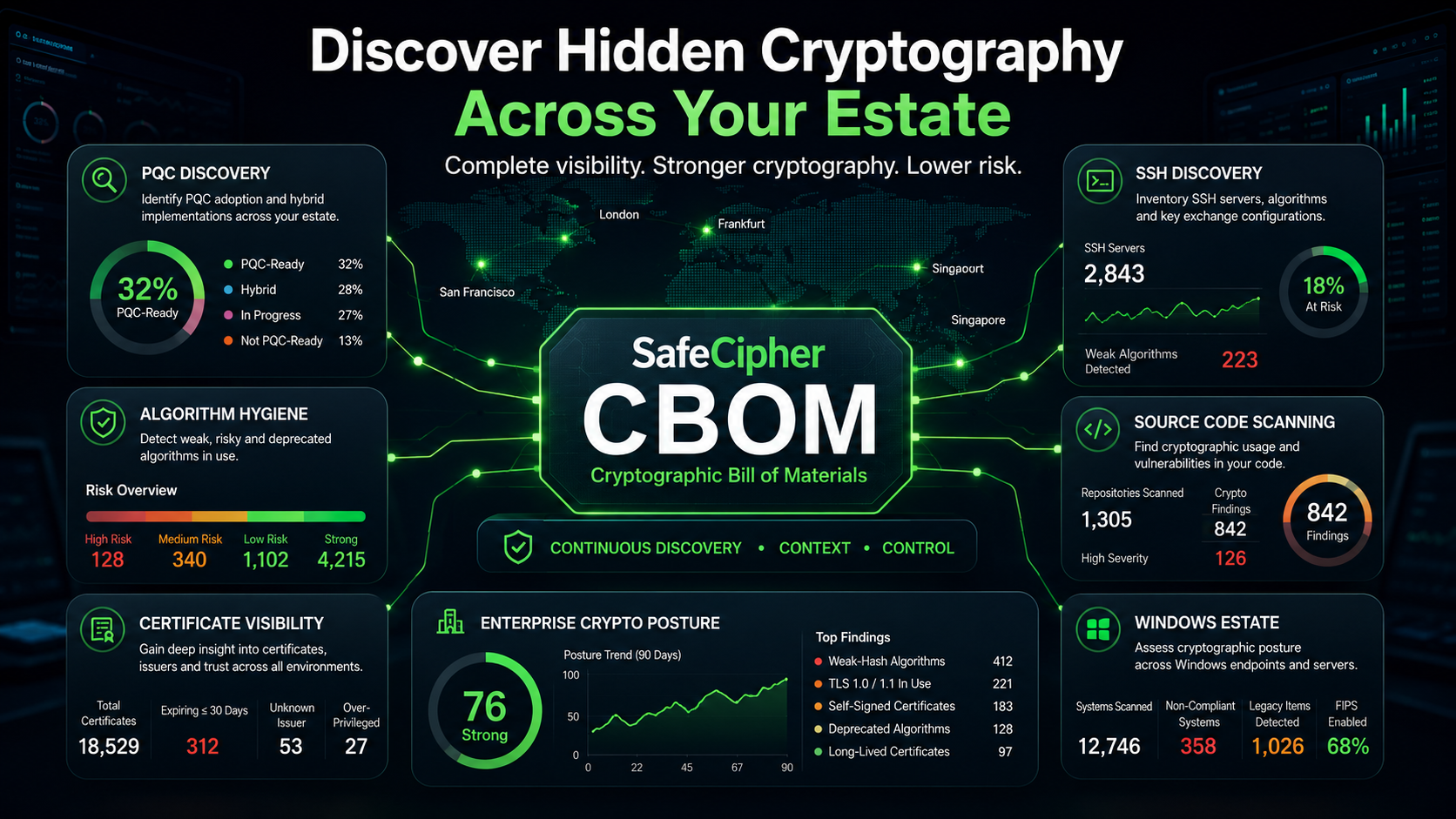
The enterprise visibility gap
You cannot govern the cryptography you cannot see
What cryptography is actually operating across your enterprise today?
Architecture diagrams, management questionnaires and generic asset inventories rarely reveal the algorithms, keys, certificates, trust relationships and protocol configurations actually deployed across applications and infrastructure.
That blind spot becomes more serious as organisations prepare for post-quantum migration, shorter certificate lifetimes, expanding cloud key-management estates and increasing regulatory scrutiny.
SafeCipher CBOM brings dispersed cryptographic evidence into one structured view
- Discover cryptographic assets and dependencies across multiple technical evidence sources.
- Identify weak, deprecated or out-of-policy algorithms and protocols.
- Highlight RSA, ECC and other components requiring PQC migration planning.
- Expose certificate, TLS, SSH, source-code and Windows configuration risks.
- Provide prioritised findings, supporting evidence and remediation context.
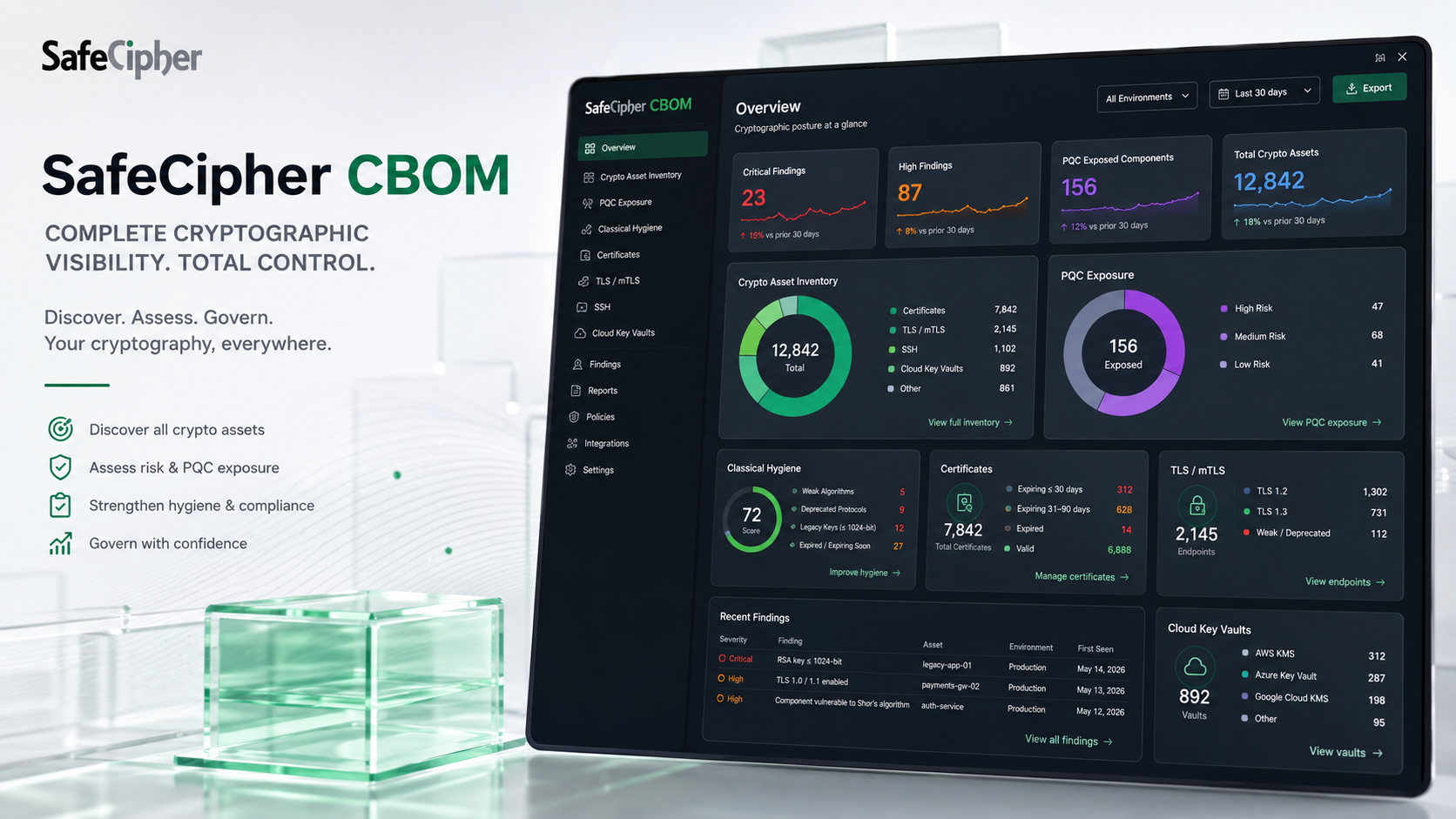
Cryptographic posture at a glance
A single evidence-led view of inventory, exposure and risk
SafeCipher consultants use CBOM evidence to correlate cryptographic asset discovery, PQC exposure, algorithm hygiene, certificate risk, TLS, SSH and cloud key-management findings.
Core capabilities
From cryptographic discovery to evidence-led remediation
SafeCipher CBOM supports cryptographic engineering, PQC readiness, audit evidence and enterprise governance rather than simply producing another uncontextualised list of metadata.
Cryptographic asset inventory
Build a structured inventory of algorithms, keys, certificates, services, configurations and dependencies from supported evidence.
PQC exposure discovery
Identify cryptographic components that depend on quantum-vulnerable public-key algorithms and prioritise migration.
Classical algorithm hygiene
Detect weak algorithms, deprecated protocols, inadequate key sizes and out-of-policy cryptographic use.
Certificate visibility
Inspect certificate lifetimes, issuers, trust stores, key strength and expiry risks across supported evidence sources.
TLS and mTLS analysis
Assess protocol versions, cipher exposure, certificate configuration and cryptographic posture.
SSH discovery
Inventory SSH algorithms, key exchange, host-key posture and configuration evidence across supported systems.
Source-code cryptography
Locate cryptographic libraries, algorithms and implementation patterns within selected repositories and folders.
Windows and cloud visibility
Assess Windows certificate stores, Schannel posture and supported cloud key-vault or KMS evidence.
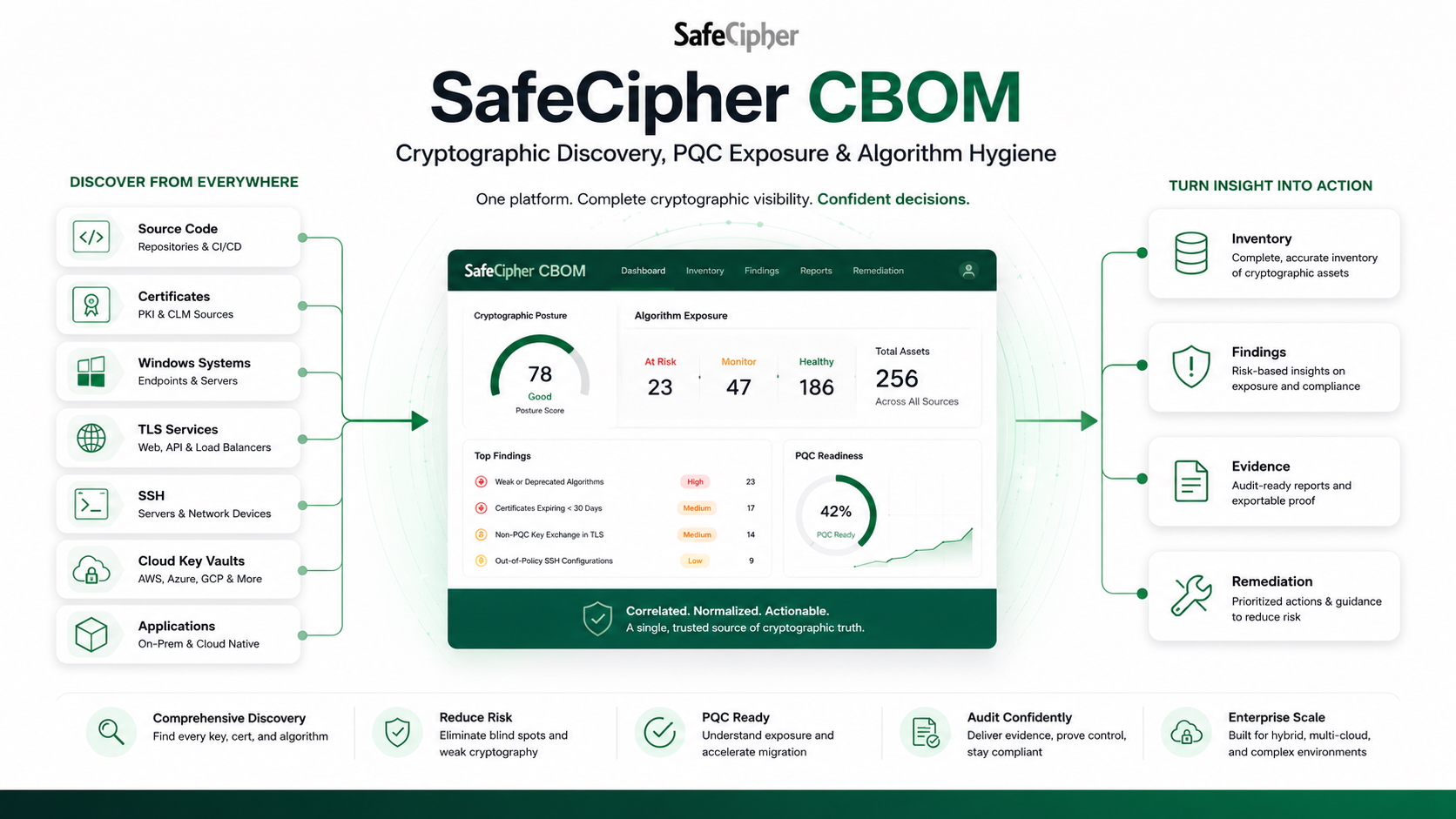
Discover · Correlate · Assess
Turn distributed technical evidence into a Cryptographic Bill of Materials
SafeCipher CBOM can ingest evidence from multiple technical sources, normalise it into a structured cryptographic inventory and support findings used for engineering decisions, audit evidence and remediation planning.
Why SafeCipher CBOM
Cryptographic engineering context — not another generic inventory tool
A list of artefacts is not enough. Organisations need to understand what the cryptography supports, whether it is appropriate, how it affects business risk and what should be remediated first.
Built by cryptography specialists
The capability is shaped by hands-on PKI, HSM, key-management, cloud and regulated-industry experience.
Evidence-led and vendor-neutral
SafeCipher assesses the evidence independently rather than steering clients toward a particular cryptographic vendor ecosystem.
PQC plus today’s operational risk
PQC readiness is assessed alongside certificate, algorithm, TLS, SSH and configuration weaknesses already affecting the estate.
How organisations engage SafeCipher
Consultancy-led cryptographic discovery
The CBOM is primarily used as part of SafeCipher consultancy engagements. Scope is agreed around the organisation’s actual cryptographic estate, risks and remediation objectives rather than around the sale of a standalone software licence.
1. Discovery & Scope
Establish the environments, evidence sources, business priorities and cryptographic questions that need answering.
- Architecture and ownership discussion
- Evidence-source selection
- Cryptographic risk priorities
- PQC readiness objectives
2. Evidence-Led Assessment
SafeCipher uses its CBOM capability alongside specialist cryptographic analysis to examine the agreed scope.
- Cryptographic inventory
- Evidence provenance
- Classical crypto hygiene
- PQC exposure analysis
3. Remediation Roadmap
Findings are interpreted in context and converted into an actionable cryptographic remediation programme.
- Prioritised findings
- Validation gaps
- Crypto-agility recommendations
- PQC migration roadmap
Independent by design
Proprietary technology without vendor lock-in
SafeCipher develops its own cryptographic analysis technology to improve the depth and efficiency of its assessments. That does not change our vendor-neutral position: remediation advice remains based on technical evidence, risk and client requirements.
What a CBOM-led assessment can provide
- Cryptographic asset inventory for the agreed scope
- PQC-exposure analysis
- Classical algorithm-hygiene findings
- Certificate, protocol and configuration risks
- Evidence provenance and validation gaps
- Prioritised remediation recommendations
- Technical findings-review workshop
- Crypto-agility and PQC migration roadmap
Where the capability is particularly useful
- Financial services and regulated enterprises
- Critical infrastructure and industrial / OT organisations
- Government, defence and security-sensitive suppliers
- Pharmaceutical and healthcare organisations
- Large fragmented PKI, KMS and certificate estates
- Teams beginning PQC discovery or crypto-agility programmes
- Security, architecture, PKI, infrastructure, audit and risk teams
Backed by SafeCipher’s enterprise cryptography experience
SafeCipher is a vendor-neutral cryptography consultancy with more than 24 years of PKI and cryptographic engineering experience across finance, technology, government, healthcare, industrial and security-sensitive environments. SafeCipher is a member of the PKI Consortium.
Frequently asked questions
Understanding SafeCipher CBOM
What is a Cryptographic Bill of Materials?
A CBOM is a structured inventory of cryptographic assets and dependencies, including algorithms, keys, certificates, protocols, libraries and the systems or applications in which they are used.
Is SafeCipher CBOM only a post-quantum discovery capability?
No. PQC exposure is an important capability, but SafeCipher also examines classical cryptographic hygiene including weak algorithms, legacy protocols, inadequate key sizes, certificate risks and out-of-policy configurations.
Is SafeCipher CBOM a standalone software product?
SafeCipher CBOM is primarily proprietary technology used to support SafeCipher-led cryptographic consultancy and assessment engagements. Alternative integration or deployment models may be considered separately where there is a clear technical and commercial case.
Can SafeCipher work with evidence from existing tools?
Yes. Where appropriate, SafeCipher can analyse supported evidence and structured exports from existing discovery, PKI, cloud, security and infrastructure tooling. The objective is independent cryptographic analysis rather than replacement of an existing technology stack.
Does SafeCipher CBOM collect private keys?
Standard assessment activity is intended to identify cryptographic metadata, configuration and evidence without intentionally collecting operational private-key material. Evidence handling and permitted data sources are agreed as part of the assessment scope.
SafeCipher cryptographic assessment
Understand what cryptography is really operating across your estate
Talk to SafeCipher about an evidence-led cryptographic assessment covering current algorithm hygiene, cryptographic dependencies, governance and post-quantum readiness.
Assessment scope, evidence sources and deliverables are agreed with SafeCipher before work begins. Specific software integration or deployment arrangements are considered separately where appropriate.